






How to Teach Loud and Quiet in Kindergarten Music
Fun Activities That Build a Foundation for Dynamic Literacy
If you’ve ever asked a room full of kindergarteners to sing quietly, you know exactly how tricky it can be to teach the concepts of loud and quiet. It can often get confused with other musical opposites such as high/low or fast/slow. Learning the difference between loud and quiet is the very first step toward developing dynamic literacy—the ability to understand, hear, and perform music with varied volume.
So how do we teach these fundamental concepts in a way that’s playful, engaging, and meaningful for young learners?
In this post, you’ll explore:
- Why teaching loud and quiet matters in early music education
- 6 playful activities to help kindergarteners experience, explore, and control dynamics
- How these skills support future musicianship
Why Loud and Quiet Matter in Kindergarten Music
I use to teach loud and soft but quickly realized that the concept of soft being opposite of loud was hard for young learners to grasp. Hard should be the opposite of soft. Once I made the switch in my terminology it definitely did help my students understand the concept quicker. So if you’re still using “soft”, consider switching to quiet.
Dynamic contrasts are one of the most obvious musical elements for young children to hear and feel. Long before they can read symbols like p (piano) or f (forte), they can sense the difference.
Teaching loud and quiet helps children:
- Develop aural discrimination, hearing contrasts in sound
- Build control over their own voices and bodies
- Gain expressive tools for telling musical stories
- Lay the groundwork for reading dynamic symbols later
Most importantly, it gives them the power to create different moods in music—learning that quiet doesn’t mean weak, and loud doesn’t mean messy.
1. Use Movement to Show Loud and Quiet
Young children often feel sound before they truly conceptualize it. That’s why movement is a perfect way to teach dynamics.
Activity: Big & Small Body Sounds
Tell your students:
“When the music is loud, let’s make our bodies big. When it’s quiet, let’s make our bodies small.”
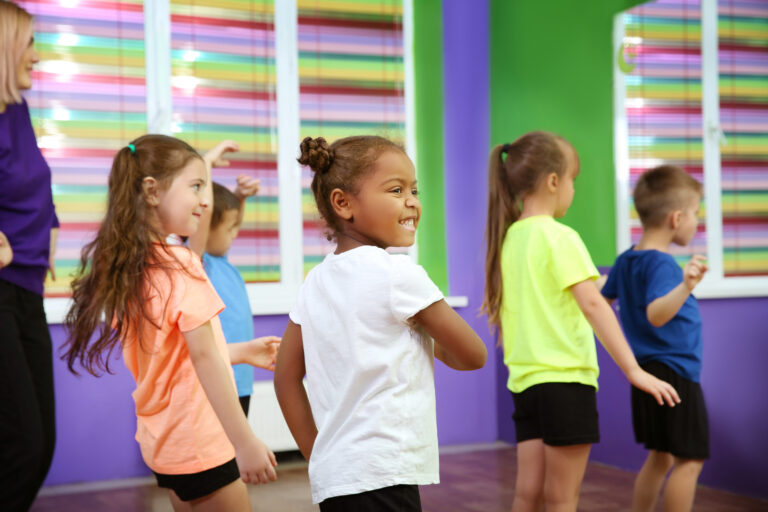
Play a recording with clear dynamic changes (or use a drum and vary your volume). Encourage them to grow tall, stretch arms, or jump on loud parts—and to crouch, curl up, or tiptoe on quiet parts.
Try this with classical pieces like:
- “In the Hall of the Mountain King” (Grieg) for gradual builds
- “Spring” from The Four Seasons (Vivaldi) for playful contrasts
Why it works: It ties volume to a physical sensation, reinforcing that loud “feels big” and quiet “feels small.”
2. Introduce Voice Types: Shout, Speak, Whisper, Sing
Before we can fine-tune loud and quiet singing, students need to explore all kinds of vocal volume. This is why many teachers use the four voice types:
- Speaking voice (talking normally)
- Whisper voice (very quiet)
- Shouting voice (controlled loud)
- Singing voice (musical sound)
Activity: Four Voice Echo Game
Hold up cards with pictures of a mouse, person, lion, and bird (or use stuffed animals). Let each represent a voice:
- Mouse = whisper
- Person = speaking
- Lion = shouting
- Bird = singing
Call out or show a card, and students echo short phrases in that voice.
Teacher: (holds up lion) “ROAR like a lion!”
Students: “ROAR like a lion!”
This builds an early sense of volume control—and highlights that quiet isn’t just quiet, it’s a purposeful choice.
3. Play Instrument Echoes at Different Volumes
Instruments make exploring dynamics exciting and tangible. Try simple echo games where you vary volume.
Activity: Drum Echo Dynamics
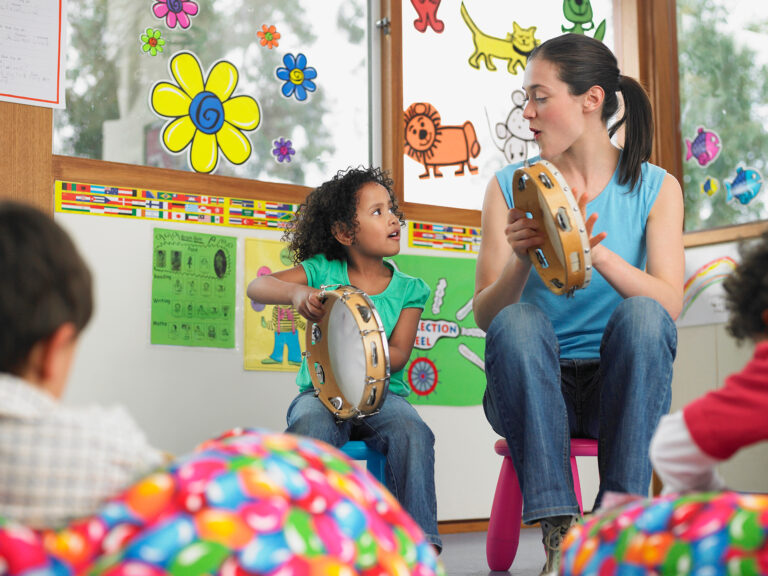
Play a short pattern on a hand drum (or any percussion) softly, then have students echo. Repeat loudly. Mix it up:
“Listen carefully… now your turn! Was that loud or quiet?”
Use simple vocabulary at first—“quiet” and “loud”—and introduce musical terms piano and forte later on.
Variation: Let students take turns being the leader.
4. Draw Loud and Quiet
Connecting sound to visuals strengthens dynamic literacy. Use art to reinforce concepts.
Activity: Loud & Quiet Lines
Give students paper and crayons. Ask them to draw:
- Big, wide lines or zigzags for loud sounds
- Tiny, close lines or dots for quiet sounds
Play short loud or soft pieces (or demonstrate on an instrument) and let them respond on their page.
Why it works: It makes an abstract concept like volume concrete and visible.
5. Play the “Loud and Quiet Detective” Game
Teach listening discrimination by turning it into a playful investigation.
🔍 Activity: Sound Detective
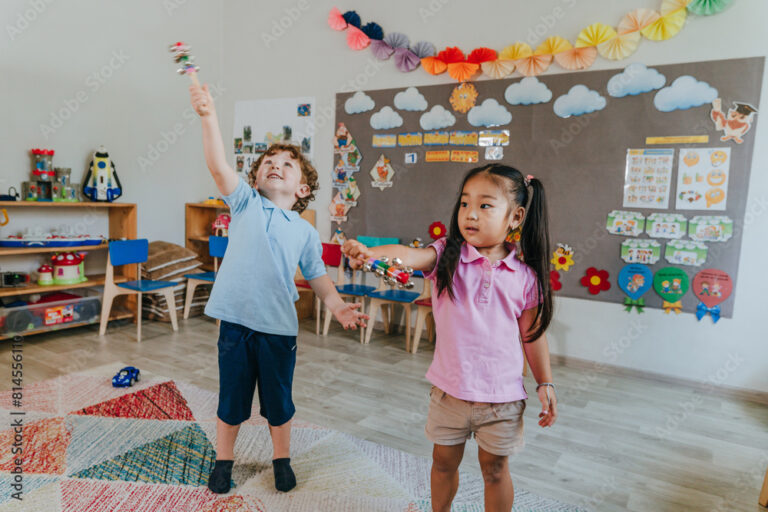
Use a small bell, triangle, or xylophone. Tell students:
“Close your eyes. I’ll play a sound. If it’s loud, put your hands on your head. If it’s quiet, put your hands on your shoulders.”
Start simple, then get sneaky with dynamic changes. Celebrate their sharp listening skills.
6. Tell Stories with Loud and Quiet Characters
Imaginative play is golden in kindergarten. Use story elements to teach dynamic contrasts.
🦁 Activity: The Lion and the Mouse
Tell or read the classic fable of the lion and the mouse. Have students help act it out with voices and sounds:
- The lion makes big, loud sounds
- The mouse makes tiny, quiet sounds
Try it with instruments or body percussion. Then swap roles—can the mouse ever be loud? What happens if the lion tries to be quiet?
Why it works: It links dynamics to emotion and storytelling, which builds expressive skills.
Quick Teaching Tips
- Keep it playful: Loud and quiet should be an exploration, not a correction. Celebrate both!
- Use clear, exaggerated examples: Young ears need obvious contrasts.
- Revisit often: Repeat these activities in new ways to reinforce learning.
- Praise control: Acknowledge students who show careful dynamic changes, not just big volume.
Teaching loud and quiet in kindergarten music isn’t about volume control for its own sake—it’s about giving students the tools to become expressive, thoughtful musicians.
Through playful, hands-on experiences, you’re helping them understand that music is more than just notes—it’s about contrast, surprise, and emotion. And best of all? You’re showing them that they have the power to make music come alive.
So grab a drum, a scarf, or a lion puppet and get started—because in the world of music, learning loud and quiet should be anything but boring.